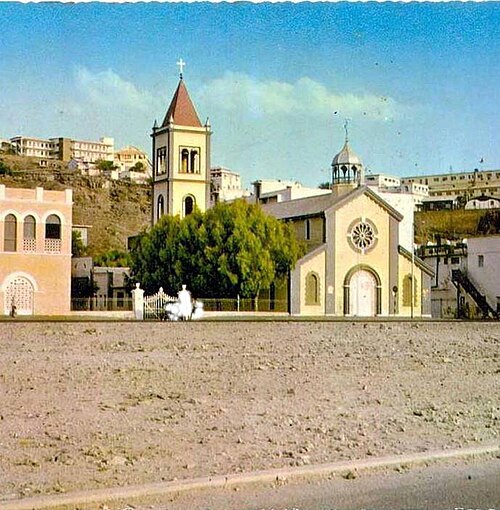
The Catholic Church in Yemen
February 17, 2026 | Middle East
At least 20 Yemeni Christians have reportedly been arrested in recent months in areas controlled by the Houthi movement, according to multiple human rights organizations and Christian advocacy groups.
Sources indicate that some of those detained were taken from their homes, while others were reportedly arrested in public spaces. Credible reports suggest several are being held in Houthi-run detention facilities, while the whereabouts of others remain unknown. Due to Yemen’s fragmented security environment and limited access for independent observers, exact figures are difficult to verify.
Christians in Yemen face significant restrictions on religious expression. Public displays of Christian symbols and open evangelism are generally prohibited. Many Yemeni Christians, most of whom are converts from Muslim backgrounds, practice their faith privately to avoid legal and social consequences. Under Yemeni law, conversion from Islam can carry severe penalties, including the possibility of capital punishment.
International organizations, including Human Rights Watch, have acknowledged reports of arrests of Christians in Houthi-controlled territories. Yemen’s religious demographics are commonly described as overwhelmingly Muslim, with little official recognition of minority religious communities.
Yemen’s religious landscape has historically been understood in terms of Sunni and Shia divisions, a factor that has shaped much of the country’s modern political conflict. The Houthi movement, which identifies with the Zaidi branch of Shia Islam, controls significant portions of northern Yemen and has been engaged in conflict with the internationally recognized government since 2015.
Conflict and Humanitarian Crisis
Yemen descended into full-scale civil war in 2015, though political instability dates back to the 2011 uprising that led to the resignation of long-time president Ali Abdullah Saleh. Since then, fighting between government forces and Houthi rebels—backed by regional actors including Saudi Arabia—has devastated the country.
According to the United Nations, Yemen was considered the world’s worst humanitarian crisis for several years, with hundreds of thousands of deaths attributed directly or indirectly to the conflict. Millions have been displaced, and widespread food insecurity and disease outbreaks have compounded the crisis.
Yemen, home to approximately 35 million people, is the largest country on the Arabian Peninsula and has long been among the poorest in the Middle East. Ongoing instability, including recent Houthi attacks on commercial shipping routes in the Red Sea, continues to draw international attention.
Historical Attacks on Christians
Christian presence in Yemen has been limited and often targeted by extremist groups. In December 2002, three American Baptist missionaries—William Koehn, Kathleen Gariety, and Martha Myers—were killed in an attack at a hospital in Jibla. In 2012, American teacher Joel Shrum was shot and killed in Taiz by militants who later claimed responsibility.
In March 2016, gunmen affiliated with the self-proclaimed Islamic State attacked a Missionaries of Charity facility in Aden, killing four nuns and 12 others. At the time, Pope Francis described the attack as an act of “senseless and diabolical violence.”
Following these incidents, most foreign Christian workers left the country. However, Christian advocacy groups report that small communities of Yemeni believers continue to meet discreetly in various regions.
Religious Freedom Concerns
Yemen consistently ranks among the countries where Christians face the highest levels of persecution. In the 2026 World Watch List published by Open Doors, Yemen was listed among the most difficult places in the world to practice Christianity.
Observers note that the recent arrests underscore the continued challenges faced by religious minorities in Yemen. While independent verification remains difficult, the reported detentions highlight ongoing concerns about freedom of belief in a country still deeply affected by war and political fragmentation.
As Yemen’s conflict persists, religious minorities—including Christians—continue to navigate their faith within a complex and often volatile environment.
By Joseph Daniel
Source:https://persecution.org/